Home
/ Blog list page
/ From Stigma to Safety: Positive Muzzle Training in Practice
From Stigma to Safety: Positive Muzzle Training in Practice
2026-09-02
WRITTEN BY Dr. Isabella Luk (BVSc, MRCVS, MSc Clinical Animal Behaviour), Behaviour Veterinarian & Founder of Paws For Thought; Michelle Kwong, JD (BSc HPS, JD, LLM Medical Ethics & Law), Founder of In Doggo Veritas.
Mention the word "muzzle," and many dog owners envision restrictive, punitive equipment reserved exclusively for dangerous animals. Board-certified veterinary behaviorists (DACVB) Behaviour veterinarians and modern animal welfare organisations have worked to dismantle this outdated stigma. In reality, a muzzle is a life-saving safety tool, a medical necessity, and in places like Hong Kong, a literal ticket to outdoor adventures. From navigating public transport—such as ferry rides out to Cheung Chau, Lamma Island, or Sai Kung—to ensuring safe medical care during an emergency, muzzle training using choice-based reinforcement is one of the most empowering skills you can teach your dog.
1. Five Reasons Behaviour Veterinarians Advocate Universal Muzzle Training
Behaviour Veterinarians strongly advise that every dog, regardless of temperament, should be muzzle trained. Rather than indicating a behavioural flaw, positive muzzle conditioning provides fundamental welfare and management benefits across a dog's life:
Gives Dogs with a Bite History a Safe Chance to Socialise: A past bite incident or reactive impulse does not mean a dog must be condemned to a life of isolation. A properly fitted basket muzzle provides a crucial physical and visual safety buffer. This allows handlers to give their dogs safe, controlled opportunities to make friends, navigate public spaces, and build social confidence without risk of injury to humans or other animals (Journal of Veterinary Behavior, 2018).
Pain Changes Behaviour During Emergencies: When a dog is severely injured, experiencing acute pain, or suffering from sudden physical trauma, instinctual self-defencee mechanisms take over. Even the gentlest, most affectionate family pet may bite when frightened or in severe pain (Journal of Veterinary Emergency and Critical Care, 2015).
Reduces Stress and Fear During Veterinary Visits: In emergency or routine medical settings, a dog conditioned to view a muzzle as a positive cue experiences lower stress during physical examinations and diagnostic handling, allowing veterinary staff to work safely and efficiently.
Prevents Scavenging and Pica on Outdoor Walks: For dogs that compulsively ingest non-food items, garbage, toxic plants, or discarded bones, a basket muzzle acts as a life-saving management barrier that prevents severe gastrointestinal obstructions or toxicities while preserving the dog's freedom to explore and sniff outdoor environments.
Unlocks Local Adventures and Public Transit in Hong Kong: Under local transport regulations—such as ferry guidelines connecting Hong Kong Island to Outlying Islands like Lamma, Cheung Chau, or Lantau—dogs are required to be muzzled during travel. A muzzle-trained dog can effortlessly navigate ferry terminals and join family staycations, island hikes, and beach excursions without fear or distress.
2. Choice-Based Training: The Power of Voluntary Participation Many Behaviour Veterinarians emphasize force-free, choice-based training over physical compulsion when introducing management equipment (Journal of Veterinary Behavior, 2018). Choice-based training grants the dog agency, building confidence rather than helplessness. Rather than forcing a muzzle onto a dog's face and buckling it tightly, choice-based protocols teach the dog to voluntarily place their snout into the muzzle:
Offer Choice: The muzzle is held out like a cup or bowl. The dog chooses whether to approach or step back. You can also scatter feed around the muzzle during preliminary introductions.
High Value Rewards: High-value liquid treats (e.g., peanut butter, wet food, or squeezable meat pastes) are offered through the front opening of the basket.
Control over Pace: If the dog pulls their head back, the trainer pauses and allows the dog to decide when to target the muzzle again. This clear communication framework eliminates panic and builds genuine enthusiasm.
Keep the Session Short, Respecting Limits: Aim for 1 to 3 minutes per session, stopping while the dog is still engaged and eager for more. Pushing past a dog's mental endurance leads to frustration or fatigue, which turns a positive learning experience into a stressful obligation. Always end on a successful, highly rewarded rep so your dog looks forward to the next round.
Maintain Neutral Associations for Generalisations: To prevent the muzzle from becoming a predictive trigger for stress, generalise its use across everyday environments. Put the muzzle on at random times—during calm moments at home, on routine, low-stress walks, or before a fun game of fetch in the garden. If the muzzle only appears during scary events like veterinary visits or reactive encounters, the dog will associate it with anxiety. Regular, unpredictable exposure keeps the association neutral-to-positive and ensures the equipment remains just another ordinary part of their daily routine.
3. Canine Stress Signals: Knowing When to Pause and Reset To ensure a positive learning experience, never force a step or flood the dog by exposing them to more pressure than they can comfortably process. Always keep sessions short and positive, and consider ending the training session immediately, giving our dogs proper breaks, if any of the following canine body language signals are observed:
Turning their head away or avoiding eye contact.
Lip-licking, yawning, or sudden scratching (displacement behaviours signalling mild stress).
Losing interest in high value treats or taking them with a tense, hard mouth.
Snatching their head back abruptly instead of moving smoothly
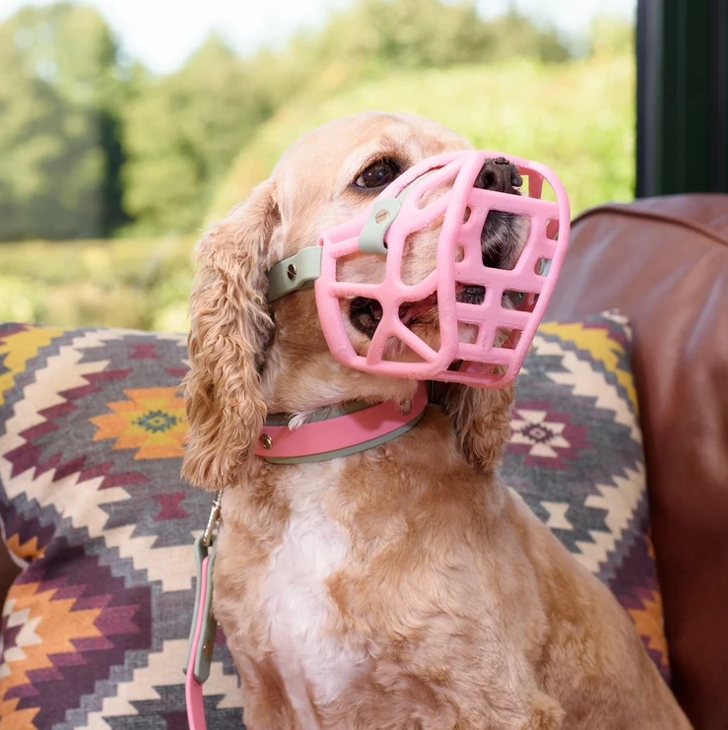
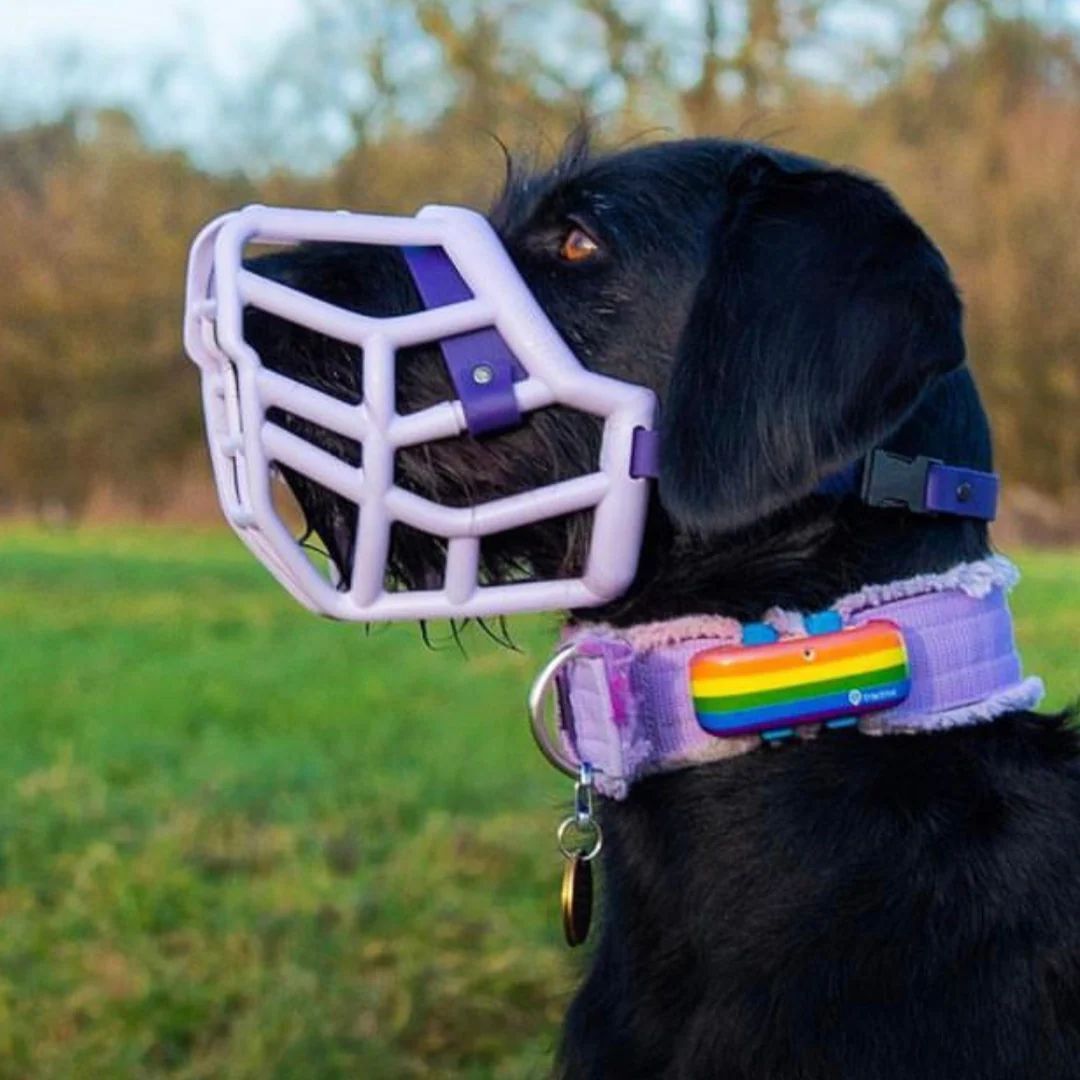
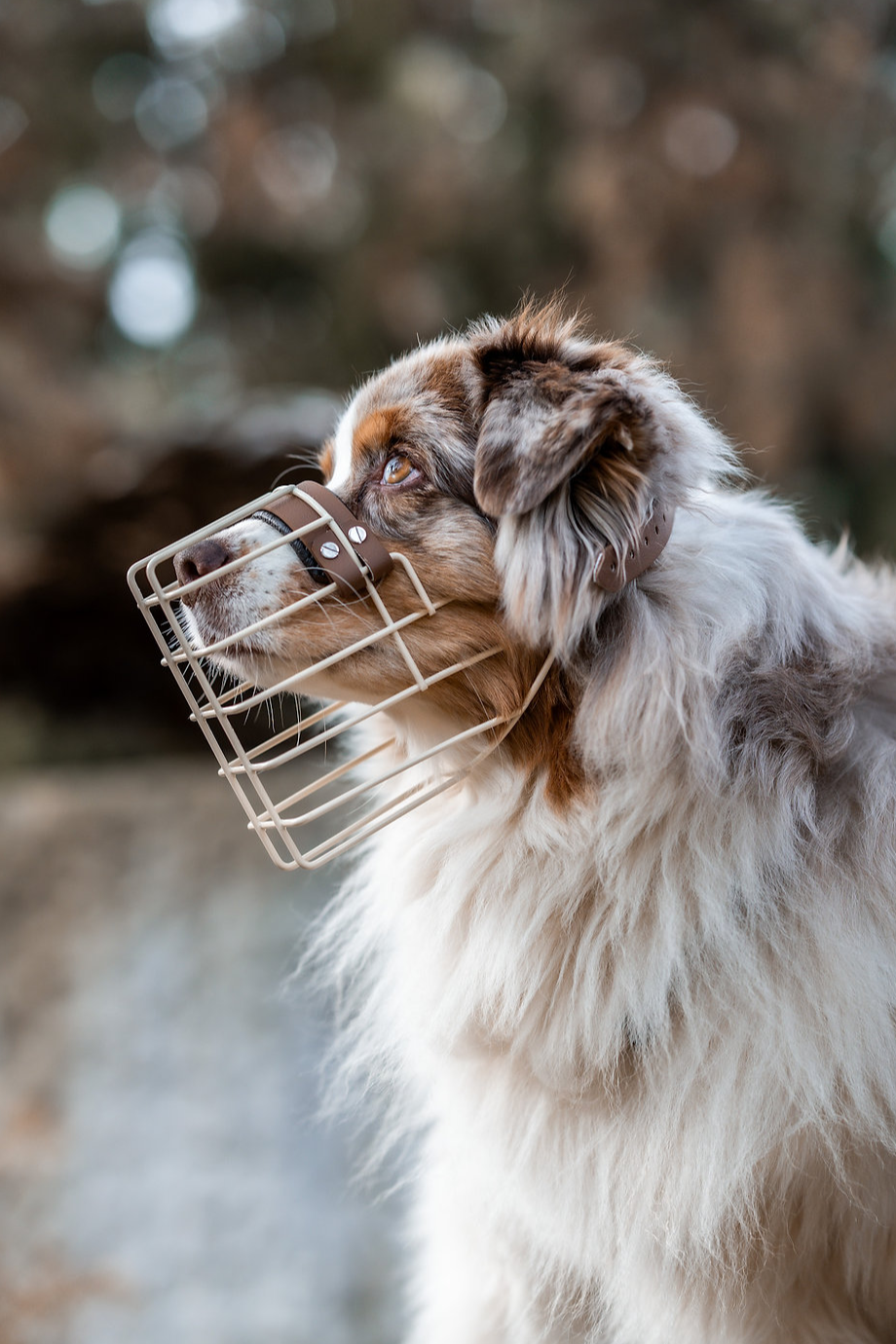
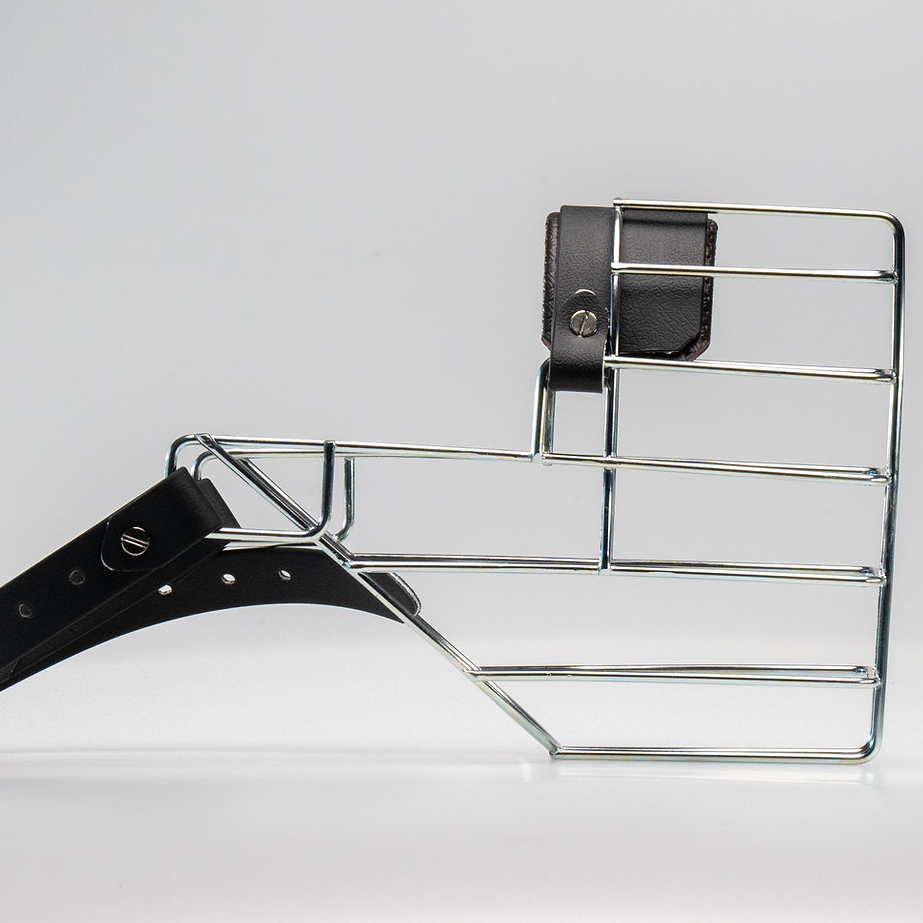
4. Equipment Selection When training a dog for Hong Kong's hot, humid climate, selecting the correct style of muzzle is a crucial physiological decision. Because dogs rely on evaporative cooling across their tongue and oral mucosa to regulate body temperature, tight fabric sleeve muzzles should never be worn during travel, exercise, or hot weather (Veterinary Record, 2020). A properly fitted basket muzzle provides enough clearance for the dog to open their mouth completely to pant, drink water, and take treats while remaining fully secure.
Thermoregulation: Dogs lack functional sweat glands over their body and depend almost entirely on panting for thermal homeostasis. A full-depth basket muzzle allows unrestricted jaw extension, enabling efficient airflow across the respiratory tract to prevent heatstroke and exercise-induced hyperthermia in tropical climates.
Hydration & Treats: Proper muzzle architecture must permit the dog to swallow liquids freely and accept high-value rewards during training or medical procedures. Unhindered drinking prevents dehydration, while seamless treat delivery reinforces positive association and cooperative care behaviours .
Reading Facial Expressions: Open-structure basket designs leave the dog’s mouth, lips, and facial musculature clearly visible to handlers, clinicians, and trainers. Unobstructed visibility is essential for monitoring subtle affective states, early distress cues, and changes in respiratory effort.
5. Step-by-Step Choice Based Muzzle Protocol To build a positive emotional response, break muzzle training down into incremental steps using positive reinforcement:
Phase 1: Visual Familiarisation Show the muzzle to your dog. Every time they look at or sniff it, mark the behaviour (e.g., click or say "Yes!") and deliver a high-value treat away from the muzzle.
Phase 2: Voluntary Targeting Smear a small amount of peanut butter or wet food on the inside edge of a basket muzzle. Hold the muzzle stationary and allow your dog to voluntarily place their snout inside to lick the treat. Do not move the muzzle toward their face—let them come to it.
Phase 3: Building Duration Gradually increase the time your dog keeps their snout in the basket before delivering a reward through the front opening. Build duration from 2 seconds up to 30 seconds.
Phase 4: Fastening the Straps Briefly touch the straps behind their ears while they feed, then release. Progress to buckling the strap for a few seconds while continuously feeding, then immediately unbuckle before they show any discomfort.
Phase 5: Real-World Generalisation Practice wearing the muzzle during fun, low-stress daily activities—such as short indoor play sessions, brief walks, or relaxing on the ferry dock—so the muzzle becomes synonymous with exciting outings.
A muzzle should never be a symbol of punishment—it is a gentle shield designed to protect our pets from unknown risks while granting them the freedom to explore. Through patience, respect, and choice-based reinforcement, wearing a muzzle can become a sign of deep trust and mutual understanding between you and your dog. Before your next outdoor adventure, consider viewing the muzzle as a key to unlocking a wider world—allowing every outing and every veterinary visit to be navigated with confidence, peace of mind, and dignity.
Bibliography:
American Veterinary Society of Animal Behavior. (2021). Position statement on humane dog training. AVSAB.
Arhant, C., Bubna-Littitz, H., Bartels, A., Futschik, A., & Troxler, J. (2010). Behaviour of smaller and larger dogs in everyday situations: Questionnaire survey on reactivity and bodily signs of anxiety. Applied Animal Behaviour Science, 123(1-2), 39–49.
Bamberger, M., & Houpt, K. A. (2006). Signalment factors, clinical signs, and follow-up in dogs presented to a veterinary clinical behavior service with aggression or anxiety problems (1991–2001). Journal of the American Veterinary Medical Association, 229(10), 1591–1601.
Bruchim, Y., Klement, E., Saragusty, J., Rany, E., Kass, P., & Aroch, I. (2006). Heat stroke in dogs: A retrospective study of 54 cases (1999–2004) and analysis of risk factors for death. The Veterinary Journal, 171(3), 522–531.
Casey, R. A., Loftus, B., Bolster, C., Richards, G. J., & Blackwell, E. J. (2014). Human directed aggression in domestic dogs (Canis familiaris): Occurrence in different contexts and risk factors. Applied Animal Behaviour Science, 152, 52–63.
Creighton, E., & Radosta, L. (2013). Muzzle training for canine patients. Veterinary Technician, 34(3), E1–E4.
Hall, E. J., Carter, A. J., & O'Neill, D. G. (2020). Incidence and risk factors for heat-related illness (heatstroke) in UK dogs under primary veterinary care in 2016. Scientific Reports, 10(1), Article 9128.
Herron, M. E., Shofer, F. S., & Reisner, I. R. (2009). Survey of the use and outcome of confrontational and non-confrontational training methods in client-owned dogs showing undesirable behaviors. Applied Animal Behaviour Science, 117(1-2), 47–54.
Neilson, J. C. (2003). Thinking outside the box: Muzzles as management tools. Veterinary Medicine, 98(10), 872–878.
Nutalapati, V. A., & Gannon, K. M. (2015). Critical care management of acute trauma and painful conditions in small animals. Journal of Veterinary Emergency and Critical Care, 25(1), 89–101.
Overall, K. L. (2013). Manual of clinical behavioral medicine for dogs and cats. Elsevier Health Sciences.
O'Neill, D. G., Jackson, C., Guy, J. H., Church, D. B., McGreevy, P. D., Thomson, P. C., & Brodbelt, D. C. (2015). Epidemiological associations between brachycephaly and upper respiratory tract disorders in dogs attending veterinary practices in England. PLoS ONE, 10(10), e0137496.
Riemer, S., Heritier, C., Windschnurer, I., Pratsch, L., Arhant, C., & Affenzeller, N. (2021). A review of interventions for fear and aggression in dogs during veterinary examinations. Veterinary Record, 189(12), e820.
Todd, Z. (2018). Barriers to the use of positive reinforcement in dog training: A review. Journal of Veterinary Behavior, 25, 28–34.
Zanghi, B. M. (2018). Eye and skin surface temperatures of dogs determined by infrared thermography and their relation to ambient temperature and coat color. Journal of Thermal Biology, 78, 303–311.