Home
/ Blog list page
/ Beyond Skin-Deep: How Plume Care Is Redefining Non-Medicated Pet Shampoo
Beyond Skin-Deep: How Plume Care Is Redefining Non-Medicated Pet Shampoo
2026-11-03
Did you know that skin is a dog's largest organ—and that it is roughly one-third the thickness of human skin? Far from just an external coat, canine skin is a delicate, highly reactive barrier that defends against environmental toxins, regulates temperature, and anchors systemic immunity. Yet dog owners often assume that any grooming product lining boutique shelves or recommended online has undergone rigorous safety and dermatological testing. The quiet reality is that the pet care industry operates within a global regulatory blind spot.
Because over-the-counter dog shampoos are legally categorized as simple "grooming aids," they fall outside the strict regulations that govern human cosmetics and veterinary drugs. Understanding this hidden gap is the first step toward making better, safer choices for our dogs.
1. The Global Regulatory Blind Spot in Pet Shampoo Legally speaking, non-medicated dog shampoos inhabit a global legislative grey zone because human cosmetic frameworks strictly define cosmetics as products applied exclusively to human bodies, leaving animal grooming washes in a structural regulatory void across major jurisdictions:
USA: Under FDA CPG Sec. 653.100, non-therapeutic pet washes are classified merely as "grooming aids" under general CPSC consumer hazard rules, explicitly excluding them from MoCRA safety reforms and mandatory INCI ingredient labeling unless they present an FHSA hazardous chemical risk.
UK: Non-medicated shampoos are excluded from human cosmetic regulations and governed purely as general chemical mixtures under GB REACH and GB CLP, requiring hazard pictograms or allergen warnings on labels only when specific chemical concentration thresholds are exceeded.
Australia: Everyday pet washes are regulated as general industrial chemicals under AICIS without mandatory full-ingredient disclosure rules, only triggering strict APVMA veterinary medicine registration if therapeutic, pest control, or medical claims are made.
Japan: Non-medicated pet shampoos fall outside the Pharmaceuticals and Medical Devices Act (PMDA), which strictly governs human cosmetics and quasi-drugs; instead, they are regulated as general consumer goods under Ministry of Economy, Trade and Industry (METI) standards and the Household Goods Quality Labeling Act, requiring no mandatory full INCI disclosures or veterinary safety registration unless therapeutic claims are made.
Singapore: Non-medicated grooming products fall outside HSA cosmetic oversight and AVS veterinary licensing, leaving them treated as general consumer goods under the CPSO with no mandatory full INCI disclosures or pre-market safety testing.
Malaysia: Standard pet grooming products bypass NPRA cosmetic registration and DVS veterinary drug rules, falling under basic KPDN retail trade laws that prohibit false trade descriptions but do not enforce mandatory full formula disclosures.
Hong Kong: No dedicated pet cosmetic statute or authority exists; products fall under general consumer laws (Cap. 362 Trade Descriptions Ordinance) enforced by Customs & Excise, which prohibit explicit false marketing claims without forcing manufacturers to declare full ingredients or undergo safety evaluations.
These systemic institutional vacuum surrenders safety governance entirely to market-driven self-regulation. Deprived of binding statutory definitions and proactive public scrutiny, the regulatory state leaves critical legal loopholes open for commercial exploitation:
Unlisted Ingredients: Concealing cheap solvents, harsh surfactants, or proprietary base formulas.
Hidden Fragrances: Grouping potential allergens, phthalates, and synthetic musks under vague labels.
Outdated Preservatives: Using harsh chemicals phased out of human skincare, like formaldehyde-releasers.
Unregulated Marketing: Claiming "100% Natural," "Hypoallergenic," or "Vet Formulated" without legal proof or testing.
2. The Biggest Issues with Modern Commercial Dog Shampoos Because of these legal gaps, many mass-market dog shampoos cause more harm than good to a dog's delicate skin:
Disrupting the Acid Mantle: Human skin is naturally acidic ("pH "∼5.5), while canine skin is near-neutral ("pH "∼6.5" to " 7.5). Acidic human shampoos or poorly balanced dog washes disrupt the canine skin barrier, inviting bacterial and yeast overgrowth.
Harsh Sulfate Stripping: Ingredients like Sodium Lauryl Sulfate (SLS) create rich lather, but they act like heavy dish soap—stripping away essential skin lipids and causing severe dryness, scaling, and reflex itching.
Synthetic Fragrance Sensitivity: Heavy artificial perfumes might smell nice to us, but they are a primary trigger for allergic contact redness, flaking, and discomfort in dogs.
Unseen Micro-Irritants: Without pre-market skin testing, many products slowly degrade the stratum corneum over time, turning mild dryness into chronic scratching.
3. What to Look for in a Good Dog Shampoo (The Skin-First Standard) To protect your dog's skin barrier, veterinary dermatologists look for products built on four core principles:
Perfect pH Balance ("pH " 6.5" to " 7.5): Formulated specifically to match canine skin physiology, preserving natural immunity and resident microflora.
Ultra-Mild, Sulfate-Free Cleansers: Powered by gentle sugar- or amino acid–derived cleansers (like Glucosides and Glutamates) that lift dirt without stripping protective lipids.
Active Barrier Hydration: Enriched with effective humectants like Panthenol (Pro-Vitamin B5), Glycerin, and natural plant extracts that lock in moisture and soothe irritation.
Complete Ingredient Transparency: Full INCI disclosure on the bottle, zero artificial dyes, no harsh preservatives, and a dedicated Fragrance-Free option for sensitive pups.
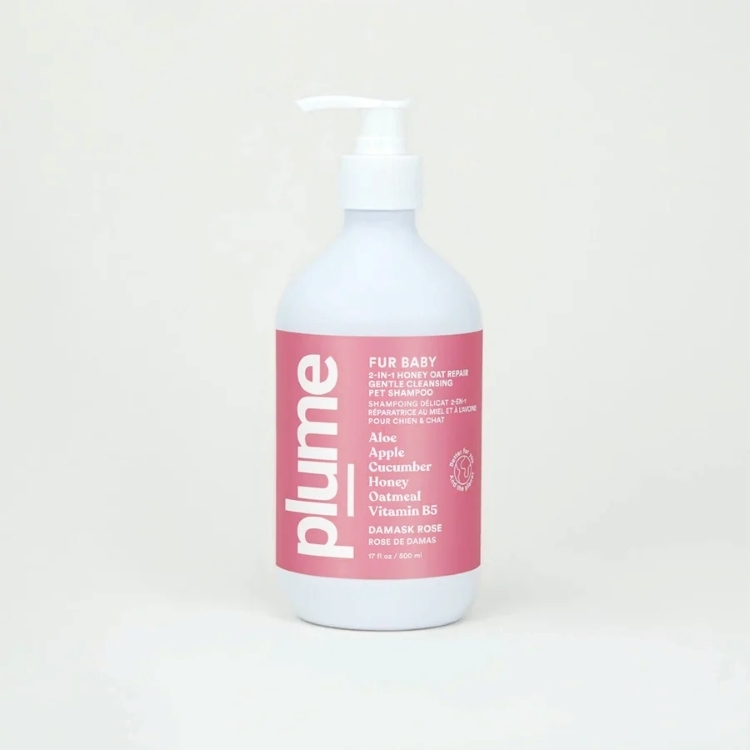
4. Why Plume Care Fits These Criteria So Well By choosing full ingredient transparency, skin-first formulation, and planet-conscious care, you can give your pet the gentle, nourishing coat care they truly deserve. Plume Care created formulas to bridge the gap between natural care and clinical science. Built around four core principles, Plume offers a gentle, skin-first alternative to mass-market grooming products:
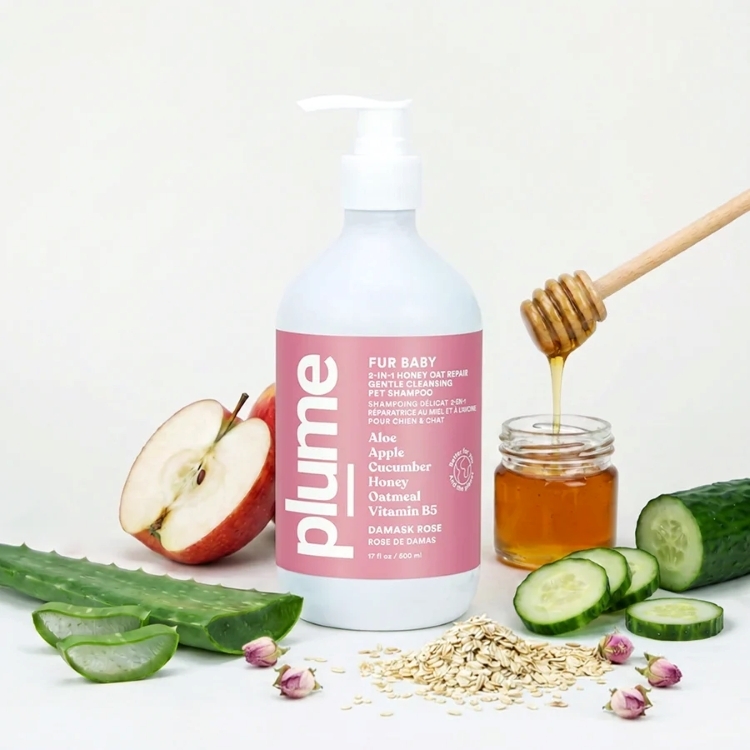
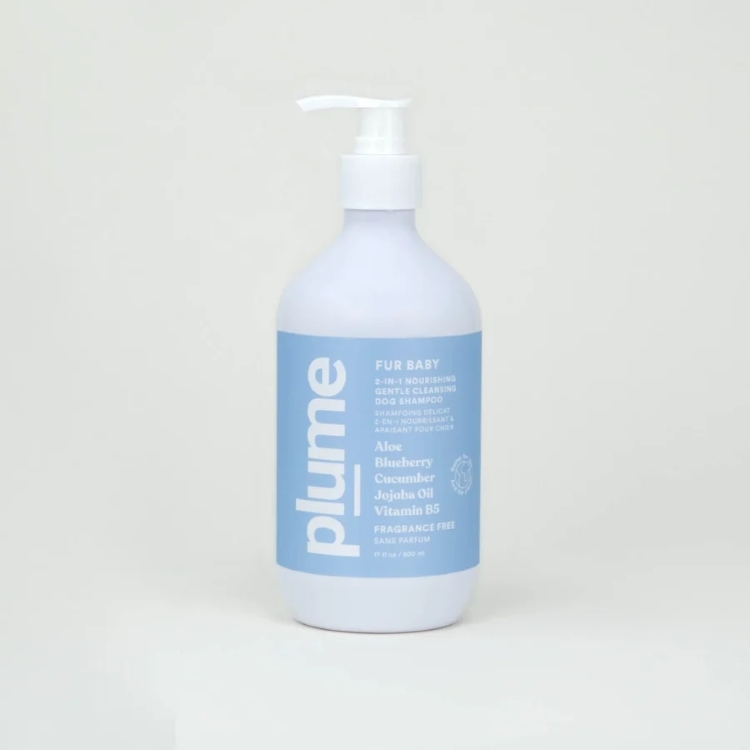
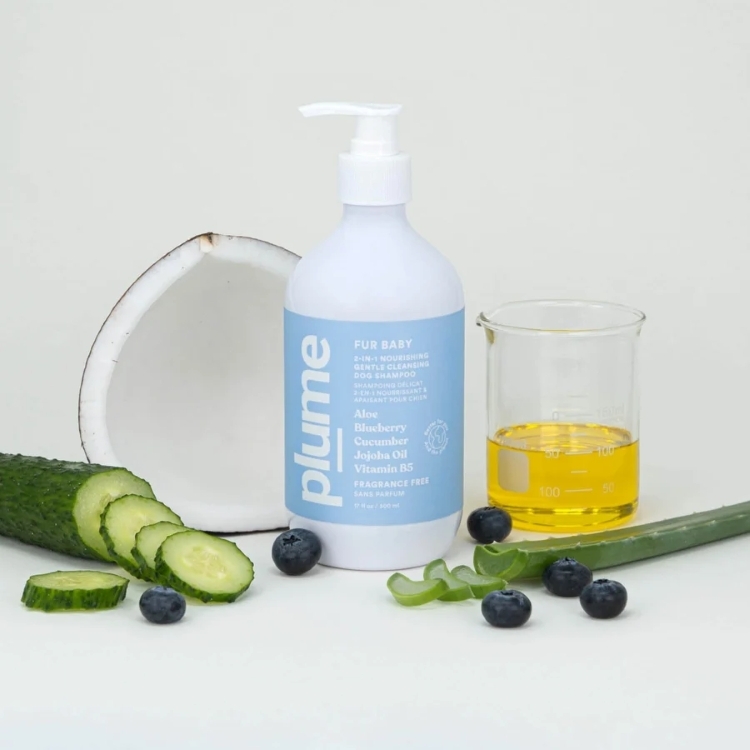
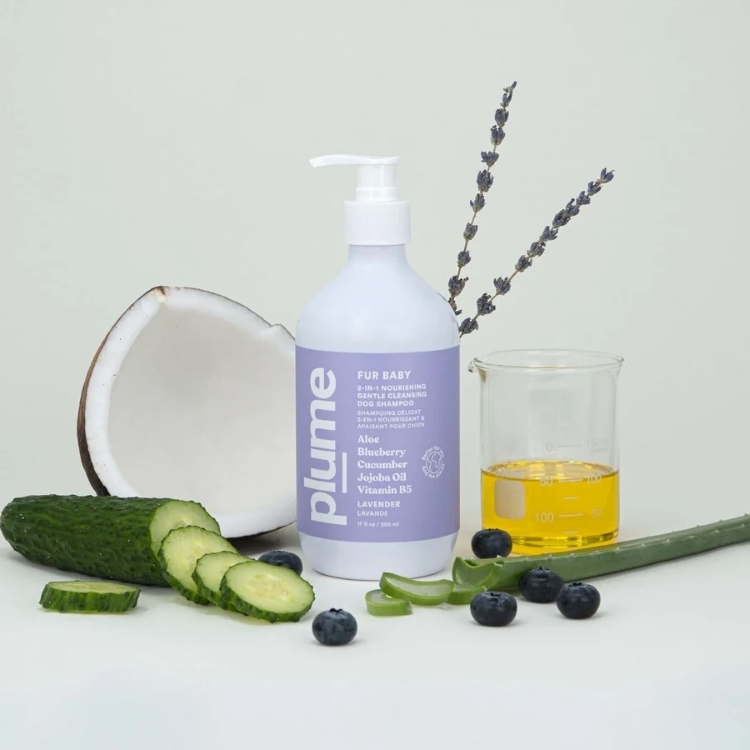
Made with Nature's Finest Ingredients: We replace harsh sulfates with ultra-gentle, plant-derived amino acid cleansers (Sodium Lauroyl Glutamate, Sodium Cocoyl Glycinate, Coco-Glucoside) paired with soothing botanical extracts like Aloe Vera, Cucumber, and Jojoba.
Developed Closely with Care Professionals: Formulated alongside veterinary standards to ensure a precise, dog-neutral pH and active barrier support using proven humectants like Panthenol (Pro-Vitamin B5) and Glycerin.
Gentle on the Skin: 100% transparent, full-INCI labeling with zero parabens, phthalates, formaldehyde-releasers, or artificial dyes—plus a dedicated Fragrance-Free option for allergic or hyper-sensitive dogs.
Gentle on Our Planet Too: Consciously sourced, biodegradable ingredients and eco-thoughtful packaging designed to minimize environmental impact while keeping your pet clean and healthy.
5. Beyond the Bath: Daily Habits for Healthy Canine Skin While a gentle, skin-first shampoo is essential, optimal skin health requires a holistic daily routine. Here are the core habits recommended by veterinary dermatologists and animal behaviorists:
Daily Kinesthetic & Systemic Health Monitoring: Beyond aesthetic maintenance, daily grooming provides pet parents with a hands-on, kinesthetic opportunity to assess their dog's body condition score, evaluate metabolic and cutaneous responses to new foods or treats (such as adverse histamine reactions or digestive flare-ups), and check for early signs of skin irritation, flaking, or parasites.
Early Desensitisation & Cooperative Care:Keep grooming stress-free by practicing cooperative care with short, reward-based sessions. Early desensitisation is key—gently handling your dog's paws, ears, and snout during everyday cuddle sessions builds positive associations, ensuring they comfortably accept future grooming and clinical examinations.
Routine Paw & Underbelly Wipe Downs: Environmental allergens like grass pollen, mold spores, and street pollutants settle on paws and lower bellies during walks. Wiping these areas down with a gentle, alcohol-free wipe or damp cloth after outdoor activity physically removes allergens before they penetrate the skin or cause contact reactions.
Tailored Bathing Schedules: Over-bathing—even with ultra-gentle cleansers—can disrupt the skin barrier if done excessively. Most dogs thrive with a full bath every 3 to 6 weeks, but the ideal frequency depends on your dog's activity level, coat structure, and individual skin needs.
Nutritional Support & Essential Fatty Acids: Healthy skin starts from within. Alongside constant access to fresh water, marine-derived Omega-3 fatty acids (EPA and DHA from fish or algae oil) help strengthen the epidermal lipid barrier and soothe allergic responses. Consult your veterinarian for the proper dosage for your dog's weight.
At In Doggo Veritas, we are committed to sourcing dog-first products that are both uncompromising in performance and gentle on our planet. Partnering with Plume Care was a natural choice because their formulas reflect everything we stand for: complete ingredient transparency, clinically backed skin support, and eco-conscious integrity. Your dog’s skin is their largest and most delicate organ—with the right everyday care and a shampoo built to protect rather than strip, you can give your companion the healthy, comfortable coat they deserve.
(Note: Plume Care is a non-medicated maintenance shampoo. If your dog has issues such as allergies, redness, balding, or active skin conditions, please speak with a veterinarian for a full check-up.)
Bibliography:
Beco, L., Guaguère, E., Méndez, C. L., Noli, C., Nuttall, T., & Vroom, M. (2013). Suggested guidelines for using systemic antimicrobials in bacterial skin infections: part 2—antimicrobial choice, treatment regimes and compliance. Veterinary Record, 172(6), 156–160.
Bizikova, P., Pucheu-Haston, C. M., Eisenschenk, M. N., Marsella, R., Nuttall, T., & Santoro, D. (2015). Review: Clinical and histological manifestations of canine atopic dermatitis. Veterinary Dermatology, 26(3), 193–e43.
Cavana, P., Peano, A., Zanna, G., & Tobiassen, E. (2015). In vitro antimicrobial activity of a shampoo containing chlorhexidine and miconazole against canine isolates of Staphylococcus pseudintermedius and Malassezia pachydermatis. Veterinary Dermatology, 26(4), 282–e64.
Chermprapai, S., Broere, F., Gooris, G. S., Schlotter, Y. M., Rutten, V. P., & Bouwstra, J. A. (2018). Altered stratum corneum lipid profile in dogs with atopic dermatitis. Veterinary Dermatology, 29(1), 25–e12.
Crosaz, O., Beco, L., & Jasmin, P. (2010). Grooming and shampooing in canine dermatology: A practical approach. Journal of Small Animal Practice, 51(8), 412–420.
DeBoer, D. J., & Hillier, A. (2001). The ACVD task force on canine atopic dermatitis (XV): fundamental concepts in topical therapy. Veterinary Immunology and Immunopathology, 81(3-4), 271–276.
Gadfroid, A., & Prelaud, P. (2020). Evaluation of epidermal barrier repairs following topical applications of ceramide-containing formulations in canine atopic dermatitis. Open Veterinary Journal, 10(2), 145–152.
Hensel, P., Santoro, D., Favrot, C., Hill, P., & Griffin, C. (2015). Canine atopic dermatitis: detailed guidelines for diagnosis and allergen identification. BMC Veterinary Research, 11(1), 196.
Kwochka, K. W. (1993). Overview of shampoo therapy in veterinary dermatology. Modern Veterinary Practice, 74(2), 88–96
Löflund, C. A., Bergvall, K. E., & Bond, R. (2018). Topical therapy in canine pyoderma: A clinical review of evidence-based options. Veterinary Dermatology, 29(5), 380–e128.
Matousek, J. L., & Campbell, K. L. (2002). A comparative review of cutaneous pH and skin surface chemistry in dogs and humans. Veterinary Dermatology, 13(6), 293–300.
Mueller, R. S., Bergvall, K., Bensignor, E., & Bond, R. (2012). A review of topical therapy for skin infections in dogs and cats. Veterinary Dermatology, 23(4), 330–e66.
Nuttall, T. J., & Cole, L. K. (2007). Evidence-based veterinary dermatology: topical antimicrobial therapy in canine pyoderma. Veterinary Dermatology, 18(4), 211–222.
Olivry, T., DeBoer, D. J., Favrot, C., Jackson, H. A., Mueller, R. S., Nuttall, T., & Prelaud, P. (2015). Treatment of canine atopic dermatitis: 2015 updated guidelines from the International Committee on Allergic Diseases of Animals (ICADA). BMC Veterinary Research, 11(1), 210.
Pucheu-Haston, C. M., Bizikova, P., Marsella, R., Santoro, D., Nuttall, T., & Eisenschenk, M. N. (2015). Review: The role of immunological pathways in canine atopic dermatitis. Veterinary Dermatology, 26(4), 233–e52.
Rund, R. A., & Moriello, K. A. (2021). Evaluation of the cleansing, lipid-preserving, and therapeutic efficacy of commercial shampoos in veterinary medicine. Journal of the American Veterinary Medical Association, 258(9), 971–980.
Santoro, D., Marsella, R., Pucheu-Haston, C. M., Eisenschenk, M. N., Nuttall, T., & Bizikova, P. (2015). Review: Pathogenesis of canine atopic dermatitis: skin barrier dysfunction and environmental factors. Veterinary Dermatology, 26(5), 312–e70.
Young, R., & Paterson, S. (2016). Topical antiseptics and barrier support in canine pyoderma: Comparative efficacy of chlorhexidine and phytosphingosine. Journal of Small Animal Practice, 57(11), 601–608.
Zabel, S., Noli, C., & Mueller, R. S. (2020). Transepidermal water loss and stratum corneum hydration in healthy vs. atopic dogs following application of different shampoo formulations. Veterinary Dermatology, 31(2), 115–e23.
Zanna, G., Docampo, M. J., Fondevila, D., Bardagí, M., Bassols, A., & Ferrer, L. (2009). Structure and lipid composition of the stratum corneum in healthy and atopic dogs. Veterinary Dermatology, 20(5‐6), 493–501.