Home
/ Blog list page
/ Navigating Hong Kong’s Tropical Summer: A Vet-Backed Heatstroke Prevention Guide
Navigating Hong Kong’s Tropical Summer: A Vet-Backed Heatstroke Prevention Guide
2026-08-07
As climate change accelerates extreme weather across the globe, Hong Kong’s summer temperatures frequently surge past 30°C to 33°C or higher, accompanied by stifling relative humidity. For our canine companions, these environmental conditions represent far more than mild discomfort—unmanaged heat exposure can escalate into a life-threatening medical emergency within minutes. Understanding the physiological risks, identifying high-risk profiles, recognizing the stages of heat stress, and adopting proactive routines can mean the difference between a safe summer and a visit to the emergency veterinary clinic.
The Physiology of Canine Thermoregulation
Unlike humans, who possess eccrine sweat glands across their entire body to facilitate evaporative cooling, dogs are physiologically ill-equipped for extreme heat.
Panting as the Primary Mechanism: Dogs cool down predominantly through panting, relying on evaporative loss across the respiratory mucosa. A minor amount of thermal regulation occurs through merocrine sweat glands located in their paw pads, but this contributes negligibly to core cooling.
The Humidity Trap: In high ambient temperatures combined with Hong Kong’s typical relative humidity (often exceeding 80%), the vapor pressure gradient decreases. This significantly impairs the efficiency of panting, causing core body temperatures to spike rapidly (Journal of Veterinary Emergency and Critical Care, 2013).
When core body temperature exceeds 40.5°C (104.9°F), systemic inflammatory response syndrome (SIRS), cellular damage, and multi-organ dysfunction can rapidly ensue (The Veterinary Journal, 2006).
High-Risk Categories: Is Your Dog Vulnerable?
While heatstroke can affect any canine, epidemiological studies highlighted several biological and physical factors that substantially increase susceptibility:
Brachycephalic Breeds: Dogs with shortened facial skeletons (e.g., French Bulldogs, Pugs, Bulldogs, Boston Terriers) suffer from upper airway resistance. Reduced airflow through the nasal passages severely restricts their capacity to cool down via panting.
Black and Dark-Coated Dogs: Dark fur absorbs significantly more solar thermal radiation compared to lighter coats. Under direct sunlight, black fur converts light energy into heat at a much higher rate, causing rapid surface and core body temperature spikes even during moderate activity (Journal of Thermal Biology, 2018).
Double-Coated Breeds: Dogs with thick undercoats (e.g., Golden Retrievers, Huskies, Samoyeds, Chow Chows, German Shepherds) are built to retain body heat in cold climates. In hot and humid environments like Hong Kong, this dense undercoat traps a layer of warm air directly against the skin, acting as a thermal insulator that severely hinders heat dissipation.
Age Extremes (Puppies & Seniors): Young dogs often lack full thermoregulatory maturity and self-regulation, while senior dogs frequently have underlying cardiovascular or respiratory compromise.
Small Breeds & Overweight Dogs: High metabolic surface area ratios or excess adipose insulation increase heat retention and overall physiological stress.
Working & Active Dogs: Dogs engaging in fast-paced activities, agility, or ball-chasing during warm periods are at elevated risk for exertional heatstroke, which can occur even in moderate weather if exercise intensity is high (Veterinary Sciences, 2020).
Practical Prevention Tips
Preventing thermal stress requires adjustments to daily routines during peak summer months:
Time Walks Strategically: Schedule longer, primary walks before 7:00 AM or after 6:00 PM when ambient temperatures and solar radiation are lower. Midday exits should be strictly limited to short, necessary toilet breaks.
Pacing and Shade: Keep outdoor sessions calm and slow-paced. Avoid high-exertion games like fetching or running. Stay in the shade whenever possible.
Pavement Safety (The Grass Rule): Asphalt and concrete store heat and can reach surface temperatures over 50°C, leading to thermal burns on delicate paw pads. Stick to grassy or shaded areas, and test the pavement with the back of your hand for 7 seconds before walking.
Hydration: Offer fresh water regularly throughout the day.
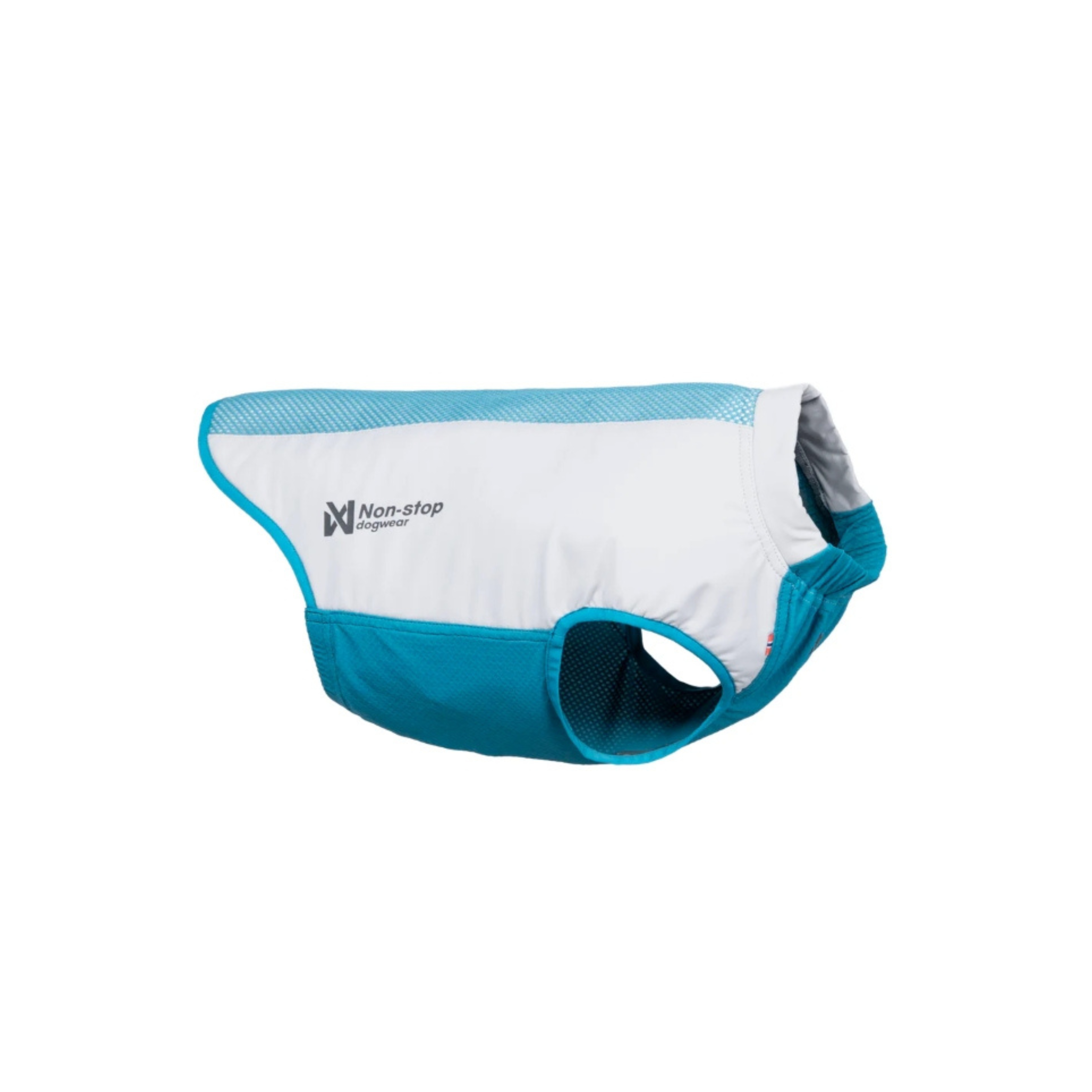
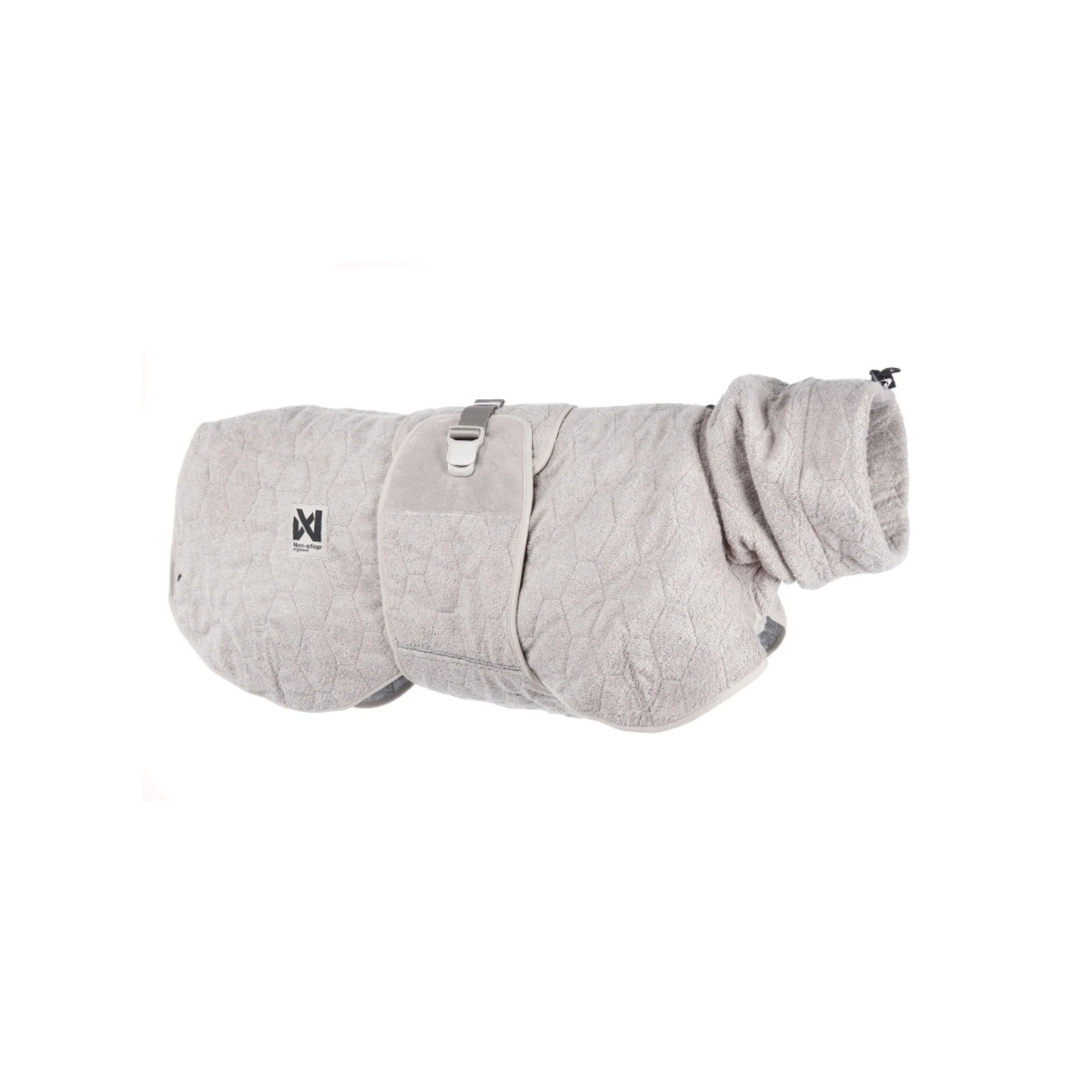
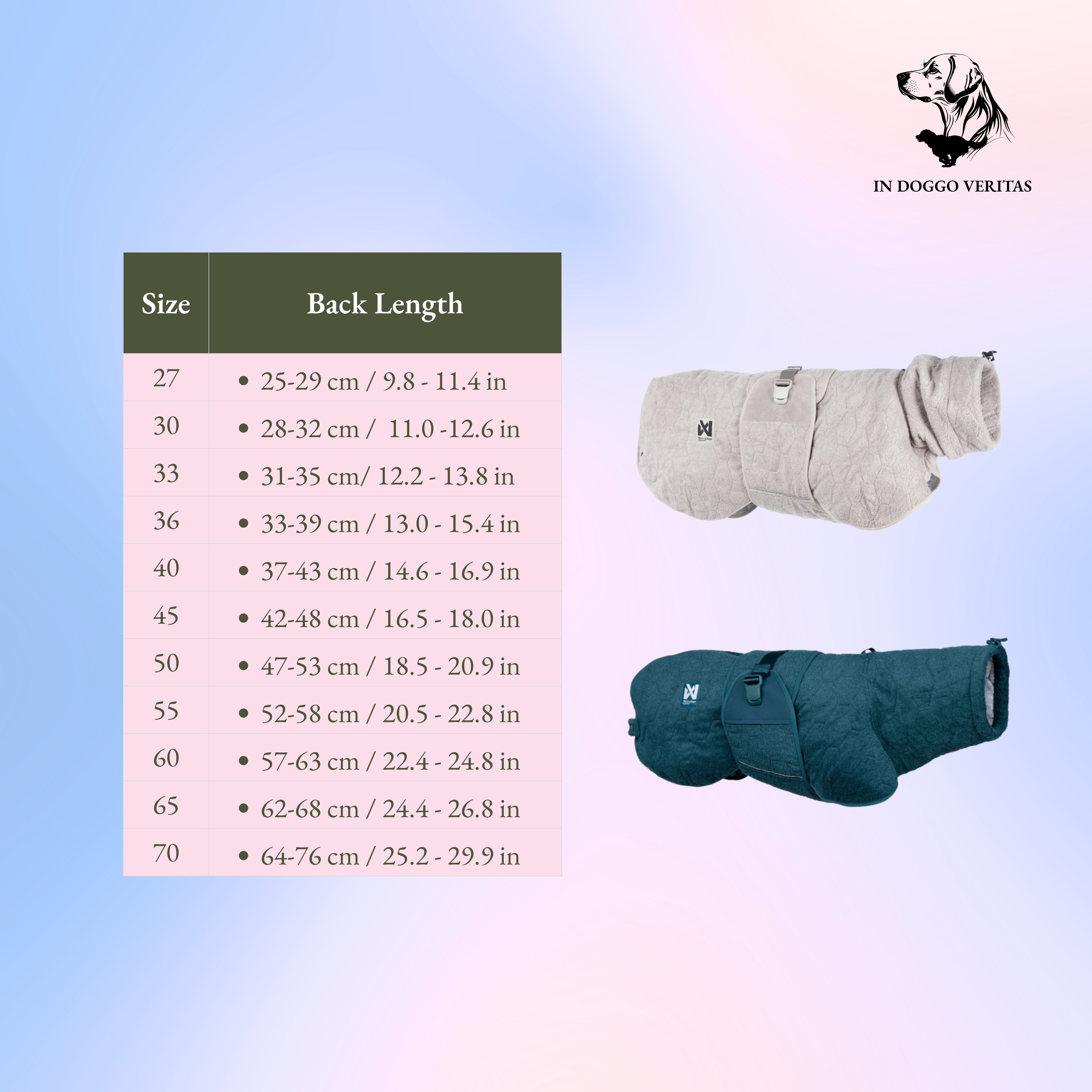
Cooling Vest: If a trip is unavoidable on a hot day, we recommend using the Cooling Vest, as it is built to keep your dog cool via cooling gels and evaporative technologies.
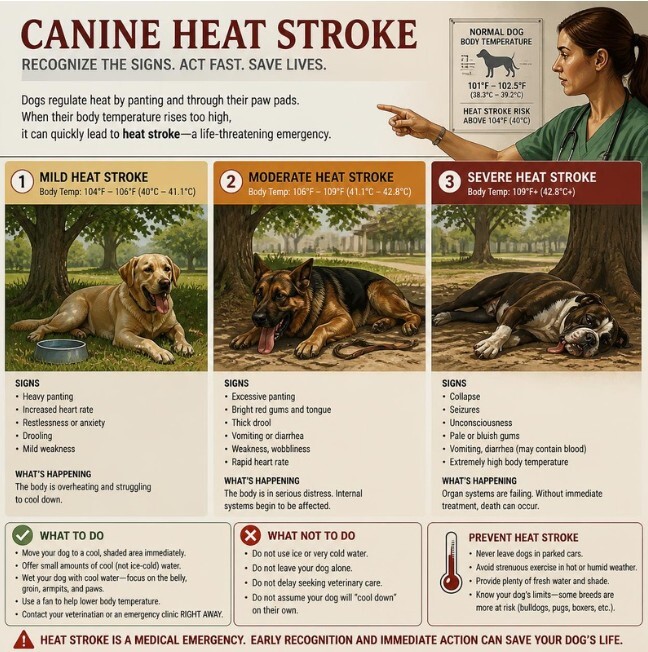
Recognising the 3 Stages of Heat Illness
If you notice any of the following symptoms in your dog, seek immediate veterinary care without delay:
Thick, Ropy Drool: Saliva becomes extremely viscous, sticky, and stringy.
Bright Red Gums: The gums turn a deep, intense cherry-red color.
Hot to the Touch: The belly, armpits, and inner thighs feel scalding hot.
🚨 Stage 3: Heatstroke (Severe & Life-Threatening)
Complete Collapse: The dog drops down and is entirely unable to stand up on its own.
Dazed, Vacant Expression: Glazed or glassy eyes staring blankly into space, unresponsive to your calls.
Pale or Purple Gums: Gums shift from red to pale white, grey, or a bruised bluish-purple shade.
Immediate First-Aid Action Plan
If your dog displays signs of heat-induced illness, take action immediately while en route to the vet:
Apply Room-Temperature Water: On the way to the veterinary clinic, pour room-temperature tap water over your dog’s belly, armpits, and inner thighs. These areas have the thinnest fur and the highest density of superficial blood vessels, offering the fastest and most efficient heat dissipation.
Critical Safety Warnings:
❌ Never Use Ice Water: Veterinary emergency literature strongly warns against using ice or freezing water (Journal of the American Veterinary Medical Association, 2015). Ice-cold temperatures induce rapid peripheral vasoconstriction (narrowing of surface blood vessels), which traps lethal heat inside the core organs, drives core temperatures higher, and can trigger acute hypovolemic shock.
❌ Never Cover with Wet Towels: Do not drape wet towels over a hot dog. Trapped moisture under a warm cloth acts like an insulating blanket, trapping heat against the body and preventing evaporative cooling.
References
Bruchim, Y., Klement, E., Saragusty, J., Rany, E., Kass, P., & Aroch, I. (2006). Heat stroke in dogs: A retrospective study of 54 cases (1999–2004) and analysis of risk factors for death. The Veterinary Journal, 171(3), 522–531. Hall, E. J., Carter, A. J., & O'Neill, D. G. (2020). Incidence and risk factors for heat-related illness (heatstroke) in UK dogs under primary veterinary care in 2016. Scientific Reports, 10(1), Article 9128.
Hall, E. J., Carter, A. J., & O'Neill, D. G. (2020). Incidence and risk factors for heat-related illness (heatstroke) in UK dogs under primary veterinary care in 2016. Scientific Reports, 10(1), Article 9128.
Hemmelgarn, C., & Gannon, K. (2013). Heatstroke: Clinical signs, diagnosis, and treatment. Compendium: Continuing Education for Veterinarians, 35(7), E1–E8.
Zanghi, B. M. (2018). Eye and skin surface temperatures of dogs determined by infrared thermography and their relation to ambient temperature and coat color. Journal of Thermal Biology, 78, 303–311.