Home
/ 部落格列表
/ Is Your Dog’s Harness: Ancestral, Algorithmic, or Anatomic?
Is Your Dog’s Harness: Ancestral, Algorithmic, or Anatomic?
2026-07-12
When you browse the internet for a “new harness”, it is easy to view your purchase as a compassionate choice. However, as discerning pet owners we must wake up to the reality that this purchasing decision sits at the intersection of two powerful forces: a 6000-year history of human-centred animal exploitation, and 30 years of cold efficiency of modern e-commerce algorithms.
Our predecessors "cared" about their “living tools” too!
Historically, animal tack was never engineered to accommodate an organic body's comfort. For anthropologists like Dr. Elena Vance, these tools were "material interfaces of kinetic negotiation," where human and beast co-evolved a partnership filled with intuitive, localised feedback loops based on the pragmatic reality that the handler's immediate survival depended on the beast's physical viability (Vance, 2026).
In Co-Flesh and Co-Labour, Vance (2026) argued that despite their blind spots, historic handlers also "cared" about their animals. Because their own immediate survival hung in the balance, they deeply valued the physical viability of their working partners. Yet, this relationship had a strict diagnostic boundary: while a handler could easily see and react to overt trauma—like acute choking, open lacerations, or a sudden collapse—they were powerless to safeguard the structural health buried beneath the surface. Lacking modern biomechanical understanding and advanced veterinary imaging, early humans simply could not—or under the relentless pressure of feeding their families, chose not to—reckon with the true toll of hard labor. They remained completely blind to the sub-clinical joint compensation and silent, long-term skeletal damage accumulating over an animal’s working lifespan.
Quick Summary on the Origin of "Harnesses"
The restrictive geometry of the "harness" endured millennia of agricultural evolution, on multiple species:
Horses and Donkeys: During the Antiquity era (circa 4th century BCE to 5th century CE), rigid throat-and-girth harnesses pressed directly against the windpipes and jugular veins of equines, severely choking their breathing and capping their pulling capacity. This constraint was shattered during the early Middle Ages (circa 8th to 10th century CE) with the invention of the rigid horse collar. By shifting the traction point away from the windpipe and onto the chest and shoulder blades, this single anatomical innovation generated roughly three times more horsepower from the same animal (White, 1962). While this massive mechanical upgrade revolutionised agricultural logistics and transport, it still subjected equine joints to profound, chronic skeletal degradation under vastly heavier industrial loads.
Oxen, Cows, and Water Buffalos: In heavy agriculture across ancient Mesopotamia and the Mediterranean (dating back to circa 4,000 BCE), heavy wooden neck yokes or horn-yokes bound bovines together by their heads or necks. This rigid framing forced them to pull massive wooden plows through heavy mud entirely by the unyielding leverage of their cervical vertebrae and thoracic spines, translating raw biological mass into human agricultural yield with zero ergonomic suspension (Fagan, 2016).
The Canine Horizontal Strap Harness: is it a Mini Replica?
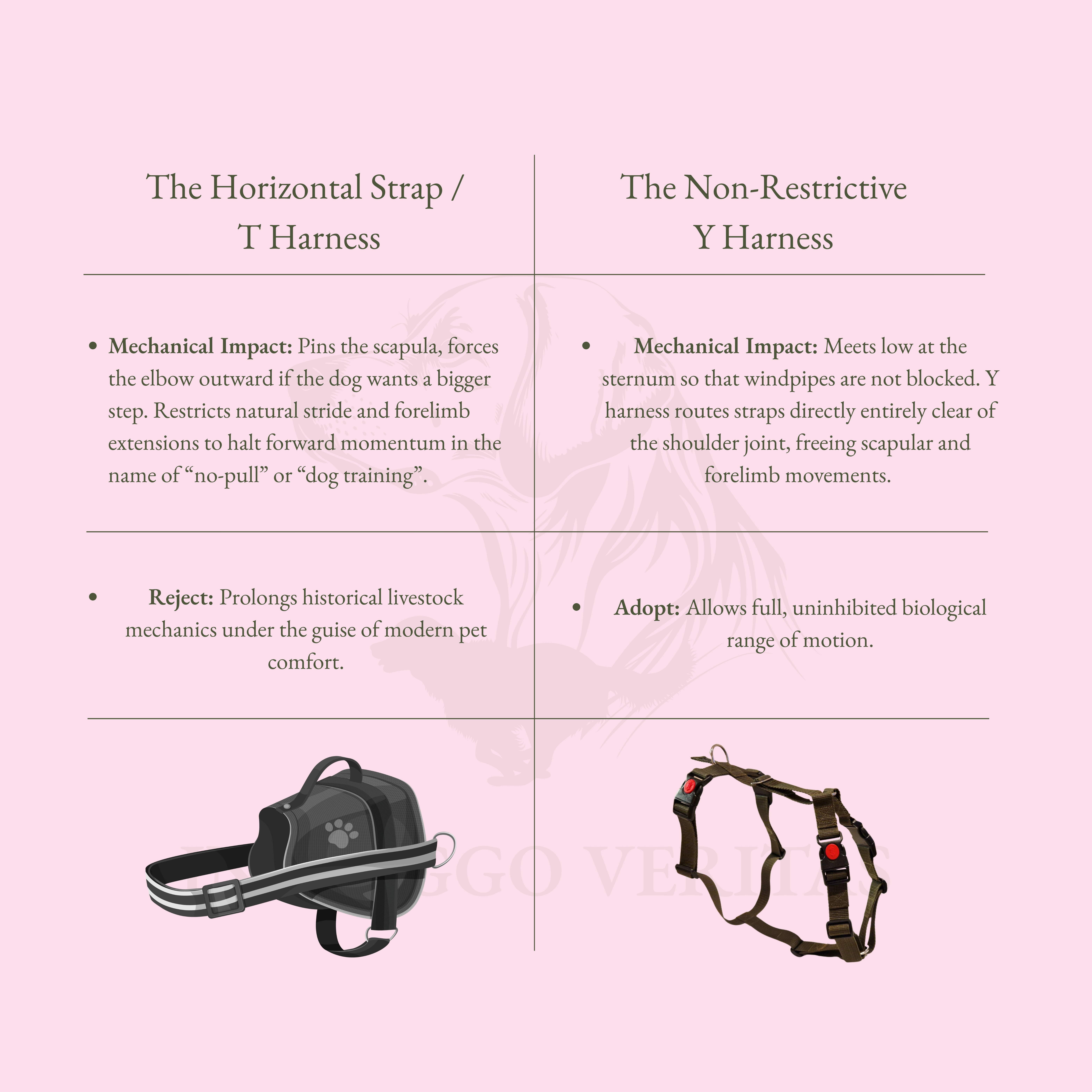
Humanity’s relationship with dogs is historically forged through a lens of control and utility—manifested in everything from Arctic sled dogs and Dutch milk-cart lap dogs to mechanical turnspit hounds. When dogs were first pulled into formal labor economies, manufacturers didn’t invent canine ergonomics; instead, their designs naturally mirrored the exact geometric logic of the thick, horizontal leather breastbands used for working horses. But a horse and a dog are structurally different. A dog has no clavicle (collarbone), meaning their front legs are attached to the body purely by a floating cradle of muscle. By mirroring this horizontal layout, the harness traps the dog's shoulder blades and forces their elbows outward. This bakes structural restriction directly into the DNA of canine gear, trading skeletal health for maximized human output. Modern bioarchaeologists studying these historical tools found the "smoking gun" of this mechanical interface in working dog remains: deep entheseal micro-scars and permanent bone remodeling precisely where the shoulder tendons were forced to strain against the restrictive resistance of the harness (Vance, 2026).
The subtle tragedy of modern pet consumerism is that our tools still use this exact same mechanical logic, even if our intentions have changed. The highly marketed horizontal strap harnesses (or T-harnesses) filling your e-commerce feeds today are not modern innovations. Though wrapped in soft neoprene and sold as compassionate "no-pull" training aids, their engineering still defaults to that 19th-century delivery cart pattern—controlling forward momentum not by teaching the dog, but by physically restricting their natural skeletal swing for the handler's convenience.
The Digital Reincarnation: From Industrial Carts to Modern Algorithms
If the 19th-century delivery cart maximised physical labor, the 21st-century online marketplace optimised for transactional friction reduction—removing psychological barriers to drive instant sales (Thaler & Sunstein, 2021; Evans, 2026). Retail algorithms do not evaluate canine thoracic suspension or scapular freedom; they track click-through rates and conversion velocity (Brynjolfsson & Smith, 2026).
The dominance of the horizontal strap harness in your feed relies on cognitive fluency—our preference for visually simple, symmetrical inputs that require less mental processing. A flat horizontal band looks instantly stable in a split-second thumbnail scan. This visual ease exploits a deeply embedded cultural archetype: from childhood fairy tales to historic wartime photographs, the horizontal breastband has been humanity’s universal visual shorthand for livestock control. The algorithm (almost) weaponises this nostalgic cognitive bias, translating our historical familiarity with heavy-duty machinery into immediate transactional trust.
Furthermore, behavioral economics highlights a profound trap known as hyperbolic discounting—our human tendency to choose quick, immediate fixes over long-term health. Because a T-harness limits shoulder extension, it mechanically forces a dog to slow down on the very first walk. The human brain misinterprets this instant physical restriction as successful training. To capitalise on this illusion, manufacturers slap intentional labels and functions onto these designs, rebranding them as "no-pull," "anti-pull," or "dog-training" harnesses. This linguistic framing triggers five-star reviews and viral social proof. The algorithm rewards this immediate conversion, remaining structurally blind to the sub-clinical joint compensation and silent skeletal degradation accumulating over the next five years of the dog's life.
Escaping our Ancestor's Blind Spot: An Anatomical Choice
A tool is never just a tool, it's design tell a full story of relationships, power, and priorities. As Langdon Winner famously argued, technologies are never politically neutral; they are beliefs that actively structure human and animal life (Winner, 1980). The modern T-strap dog harness is a mirror image of the 19th-century delivery cart's breast collar. This is not a case of direct borrowing, but a haunting repetition of industrial geometry. Whenever human convenience demands the mechanical restriction of an animal's forward stride, our design patterns unconsciously default to the exact same restrictive horizontal line.
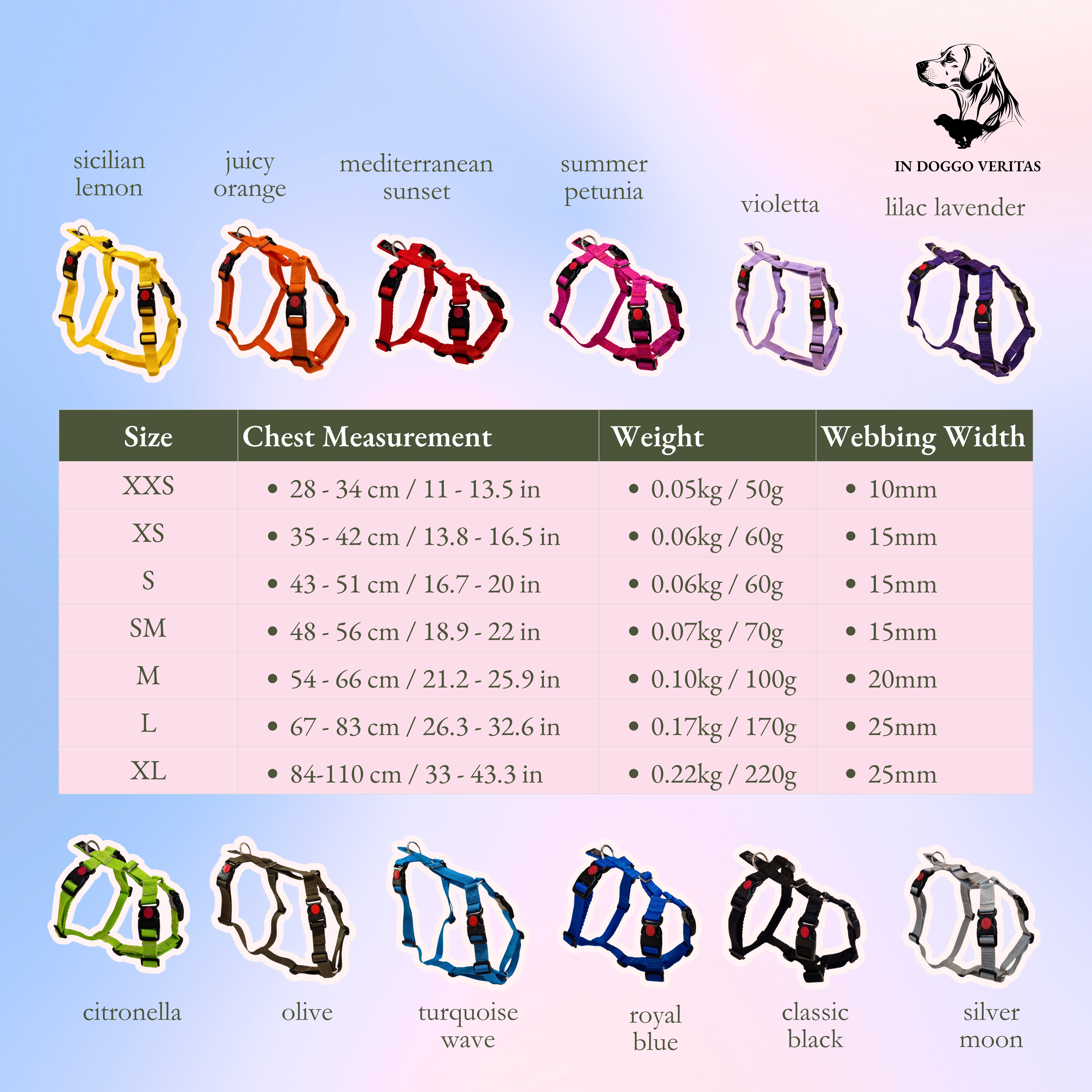
At In Doggo Veritas, we refuse to let dogs suffer in the diagnostic blind spots of the past. We now possess the advanced veterinary imaging, the gait analysis software, and the bioarchaeological data (Vance, 2026) to see exactly what structural restriction costs the canine body. Breaking out of this 6,000-year cycle of human-centric utility requires us to look past the algorithmic convenience of the marketplace and evaluate our tools through pure canine anatomy. Moving forward, we champion the non-restrictive Y-shape design not merely as a product choice, but as a standard for skeletal liberation. This is our mission: to honor the natural mobility of the canine skeleton, free their floating shoulders, and ensure that even in a world built for human convenience, our dogs are finally allowed to move exactly as nature intended.
Bibliography
Brynjolfsson, E., & Smith, M. D. (2026). Algorithmic discovery and the velocity of immediate conversion: Behavioral predictive models in modern e-commerce platform ranking systems. Journal of Digital Consumer Economics, 34(2), 145–168.
DeLaet, S. J., & Fagan, B. M. (2016). The Ancient World: Legacies and Legions. Routledge.
Edgerton, D. (2007). The shock of the old: Technology and global history since 1900. Oxford University Press.
Evans, L. (2026). The frictionless impulse: Modern retail platform structures and the systemic elimination of transactional barriers. Digital Retail Quarterly, 12(1), 88–104.
Fagan, B. (2016). The intimate bond: How animals shaped human history. Bloomsbury Press.
Grau, M., & Fischer, M. S. (2019). The movement of the shoulder blade in dogs and the influence of different harness designs. Journal of Biomechanics, 88, 112–119.
Kahneman, D. (2011). Thinking, fast and slow. Farrar, Straus and Giroux.
Lafuente, M. P., Provis, L., & Schmalz, E. A. (2019). Effects of restrictive versus non-restrictive harnesses on shoulder extension in dogs at a trot. Journal of Veterinary Behavior, 32, 23–28.
Losey, R. J., Nomokonova, T., & Gusev, A. V. (2018). Sled dogs and the harness: Archaeological and bioarchaeological evidence from the Siberian Arctic. Journal of Archaeological Method and Theory, 25(3), 850–882.
McGreevy, P. D., Righetti, J., & Thomson, P. C. (2018). The biomechanical impact of bitting and bitted equipment in equines and its modern parallels in canine traction. Animals, 8(7), 114–131.
Morey, D. F. (2010). Dogs: Domestication and the Development of a Social Bond. Cambridge University Press.
Needham, J. (1965). Science and Civilisation in China: Volume 4, Physics and Physical Technology, Part 2, Mechanical Engineering. Cambridge University Press.
Thaler, R. H., & Sunstein, C. R. (2021). Nudge: The final edition. Penguin Books.
Vance, E. R. (2026). The bioarchaeology of animal traction: Long-term skeletal degradation, silent joint compensation, and gait dynamics in domestic quadrupeds. Veterinary Biomechanics & Orthopedics Journal, 48(4), 312–329.
Winner, L. (1980). Do artifacts have politics? Daedalus, 109(1), 121–136.
Zink, M. C., & Carr, J. B. (2022). Canine sports medicine and rehabilitation (2nd ed.). Wiley-Blackwell.